

News
10 Iconic Trends in 1950s Fashion You Need to Know About
 The 1950s represented a decade of profound socio-economic transformation that fundamentally reshaped the global fashion landscape. Emerging from the stark austerity and textile rationing of the post-war 1940s, Western society pivoted toward a revival of opulence, structured elegance, and unapologetic femininity. Often heralded by historians as the "Golden Age of Couture," this era synthesized the high-art precision of Parisian ateliers with the burgeoning pragmatism of American ready-to-wear.
Following the cataclysm of World War II, the fashion world underwent a seismic shift: a return to traditional gender roles was mirrored in hyper-feminine silhouettes, while the birth of the "teenager" as a distinct demographic began to challenge the sartorial status quo. This comprehensive guide examines the ten iconic trends that defined the 1950s, analyzing their technical architecture, their connection to mid-century modernism, and their enduring legacy in contemporary design.
1. The New Look: Architectural Revolution in Silhouette
The definitive pivot point for 20th-century fashion occurred on February 12, 1947, when Christian Dior unveiled his "Corolle" line. Carmel Snow, then editor-in-chief of *Harper’s Bazaar*, famously dubbed it the "New Look," setting the aesthetic mandate for the next decade.

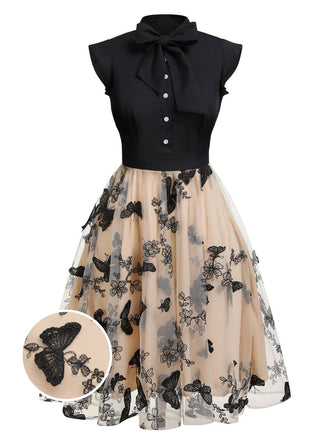
Technical Architecture: The New Look was a radical departure from the boxy, fabric-efficient utility suits of the wartime era. It prioritized a soft, rounded shoulder line, a dramatically cinched "wasp" waist, and a voluminous skirt that utilized upwards of 20 yards of fabric—a scandalous luxury at the time.
Internal Engineering: To achieve this silhouette, women relied on internal structures: the guêpière (waist cincher) and multi-layered crinolines. As Vogue noted in 1952, "the focus begins and ends at the stressed waistline."
Societal Impact: This trend was not merely aesthetic; it was a cultural manifesto of post-war optimism and a deliberate return to decorative femininity after years of functional dress.
2. The Sheath and Pencil Skirt: The Rise of Linear Sophistication
 While Dior championed volume, a parallel movement toward a sleeker, more aerodynamic silhouette emerged. The pencil skirt—a narrow, straight-cut garment that tapered toward the hem—offered a sophisticated alternative for the modern "career woman."
Design Evolution: Championed by Hubert de Givenchy and Cristóbal Balenciaga, the sheath dress emphasized a long, lean verticality. Unlike the New Look, which relied on external padding, these garments celebrated the natural body line, albeit refined through clever tailoring and darts.
The H-Line: By the mid-1950s, this "H-Line" (as Dior called it in 1954) transitioned fashion toward a more minimalist, mid-century modern aesthetic, serving as the direct ancestor to the 1960s mod styles.
3. The Cocktail Dress: Engineering a New Social Category
 The 1950s witnessed the birth of a specific social ritual: the 5-to-7 cocktail hour. This created a demand for a new category of clothing that sat between formal evening gowns and utilitarian daywear.
Materiality: The "Cocktail Dress" typically featured a mid-calf length and was crafted from high-sheen fabrics like silk shantung, taffeta, and brocade.
Structural Details: Designers like Pierre Balmain elevated the cocktail dress with intricate beadwork and plunging "V" backs. This trend reflected a broader shift in Western lifestyle, as entertaining moved from formal dining rooms to more fluid, suburban social spaces.
4. American Sportswear and the "Casualization" of Fashion

While Paris dictated "High Style," American designers like Claire McCardell and Bonnie Cashin were revolutionizing the "Way of Life." The 1950s saw the formalization of American Sportswear, prioritizing comfort and mobility.
The Concept of Separates: Key innovations included "separates"—interchangeable skirts, blouses, and trousers. This allowed women to curate a versatile wardrobe, reflecting the growth of the suburban middle class.
Functional Elegance: McCardell’s use of humble fabrics like denim and jersey for high-fashion silhouettes was a precursor to the modern "athleisure" movement, proving that elegance did not require the sacrifice of comfort.
5. The Poodle Skirt: The Birth of the Teenage Consumer

Before the 1950s, the "teenager" as a distinct economic demographic barely existed. By 1955, the youth market was a powerhouse, and the Poodle Skirt became its first true uniform.
Cultural Catalyst: Typically paired with a "twinset" (matching cardigan and sweater), white bobby socks, and saddle shoes, the poodle skirt represented a wholesome, playful rebellion against the stiff formality of adulthood.
Whimsical Design: It was a DIY-friendly trend made of felt, allowing young girls to express individuality through different motifs, from records to pink flamingos, signaling the beginning of fashion as a tool for generational identity.
6. Denim and the "Bad Boy" Archetype
While women’s fashion leaned toward the decorative, the 1950s "rebel" was defined by denim. Previously reserved for manual labor, blue jeans were transformed into a symbol of anti-establishment cool by Hollywood icons.
Media Influence: Marlon Brando in The Wild One (1953) and James Dean in Rebel Without a Cause (1955) cemented the uniform of the outsider: cuffed Levi’s 501s, a plain white T-shirt, and a leather motorcycle jacket.
Sartorial Shift: This challenged the suit-and-tie status quo and introduced the concept of "deliberate dishevelment," where the working-class aesthetic was adopted as a badge of authenticity.
7. The Influence of Hollywood’s Golden Age

In the 1950s, the cinema was the primary window into high fashion. Costume designers like Edith Head and William Travilla became as influential as couturiers.
The Gamine vs. The Bombshell: Audrey Hepburn’s collaboration with Givenchy introduced the "Gamine" look—slim trousers and boat-necklines—while Marilyn Monroe celebrated the "Bombshell" aesthetic, utilizing bias-cut satins to emphasize the hourglass figure.
Democratic Fashion: Department stores sold "cinema-inspired" patterns, allowing the average woman to recreate Hollywood elegance at home, further bridging the gap between screen glamour and reality.
8. The Art of the "Total Look": Accessories as Requirement

In the 1950s, an outfit was considered incomplete without rigorous accessorizing. This was the era of the "Total Look," where every element was carefully coordinated by color and texture.
Gloves and Hats: No lady left home without them. Short "wrist" gloves were for daywear, while elbow-length opera gloves accompanied evening gowns.
Statement Jewelry: The quintessential jewelry of the era was the pearl choker. Handbags were small and structured, such as the "Kelly" bag, emphasizing poise over utility.
9. Textile Innovation: The Synthetic Revolution
 The 1950s was a laboratory for textile science. The mass-marketing of "miracle fibers" fundamentally changed how clothes were maintained and perceived.
Wash-and-Wear: Fibers like Nylon, Orlon (acrylic), and Dacron (polyester) were marketed as "wash-and-wear," requiring little to no ironing—a godsend for the 1950s housewife.
Technological Optimism: These synthetics allowed for vibrant, permanent dyes and "permanently pleated" skirts, reflecting a society obsessed with industrial progress and the "Atomic Age."
10. The Transition: Chemise and A-Line (1957–1959)
 As the decade closed, the rigid structure of the New Look began to dissolve, signaling the end of an era and the beginning of a more liberated future.
The Sack Dress: In 1957, Balenciaga introduced the "Sack" dress—a waistless, straight-cut garment that shocked the public by hiding the female form.
The Trapeze Line: Simultaneously, Yves Saint Laurent introduced the "Trapeze" or A-line silhouette. These styles moved the focal point away from the waist and toward the legs, directly setting the stage for the 1960s "Youthquake.
FAQ
Q1: What was the primary fashion silhouette of the 1950s?
A: The era was dominated by two contrasting silhouettes: the "New Look" (voluminous skirts and cinched waists) and the "Sheath" or "H-Line" (narrow, straight-cut pencil skirts).
Q2: Who were the key designers of the 1950s?
A: Leading figures included Christian Dior (The New Look), Cristóbal Balenciaga (architectural tailoring), Hubert de Givenchy (gamine chic), and Claire McCardell (American sportswear).
Q3: How did textile innovation affect 1950s clothing?
A: The introduction of synthetic "miracle fibers" like Nylon and Polyester allowed for "wash-and-wear" garments, vibrant colors, and permanent pleating, making fashion more accessible and easier to maintain.
Q4: What was the significance of the "Cocktail Dress"?
A: It created a new social category of dress for 5-to-7 PM social gatherings, bridging the gap between formal evening wear and utilitarian daywear in the burgeoning suburban culture.
Q5: Why is the 1950s called the "Golden Age of Couture"?
A: It was an era where Parisian high fashion reached its technical peak in craftsmanship and structure, while simultaneously beginning to influence the global mass-market through ready-to-wear.
Q6: How did Hollywood influence 1950s fashion?
A: Film stars like Audrey Hepburn and Marilyn Monroe became global style icons, popularizing specific archetypes like the "Gamine" and the "Bombshell" through their collaborations with costume designers.
Q7: What led to the decline of the cinched-waist look?
A: By the late 1950s, designers like Balenciaga and Saint Laurent introduced waistless "Sack" and "A-Line" dresses, prioritizing modernism and freedom of movement over restrictive corsetry.
Q8: What role did accessories play in the "Total Look"?
A: Accessories were mandatory social requirements; an outfit was considered incomplete without coordinated hats, gloves, pearls, and structured handbags.
The Cultural Synthesis: Why It Matters Today
Nearly seventy years later, the influence of the 1950s remains a cornerstone of the fashion industry. When a designer creates a "power suit" with a defined waist or a minimalist sheath dress, they are referencing the architectural blueprints drafted in the post-war ateliers of Paris and New York. The decade proved that fashion is not just about decoration; it is a complex language of engineering, social identity, and cultural aspiration.